

Would you like to do your bit – sometimes quite literally – for biodiversity? Many people think that helping bumblebees, butterflies and other pollinators and supporting biodiversity requires a large plot of land or at least a yard of one’s own. However, the situation of pollinators can be improved even in a rented home and even on small balconies.
Pollinators have declined worldwide, which is why restoring suitable habitats for them is vital. By doing so, we also protect ourselves, as three quarters of the world’s most important food crops depend on the work of pollinators. At the same time, we help curb biodiversity loss more broadly: giving space back to nature benefits birds, bats, hedgehogs and other small mammals, among others.
Flowers for the yard and balcony
The easiest way is to grow flowers that attract pollinators, and this can also be done on a balcony, for example in a pot or planter box. Good options include oregano, sage and calendula, as they bloom for a long time and provide both nectar and pollen. It is worth remembering that highly bred double flowers contain very little food for pollinators, because their stamens have been bred into extra petals and no longer produce pollen. The best choices are Finnish wild plants and traditional perennial varieties, such as columbine, mallows and foxglove.
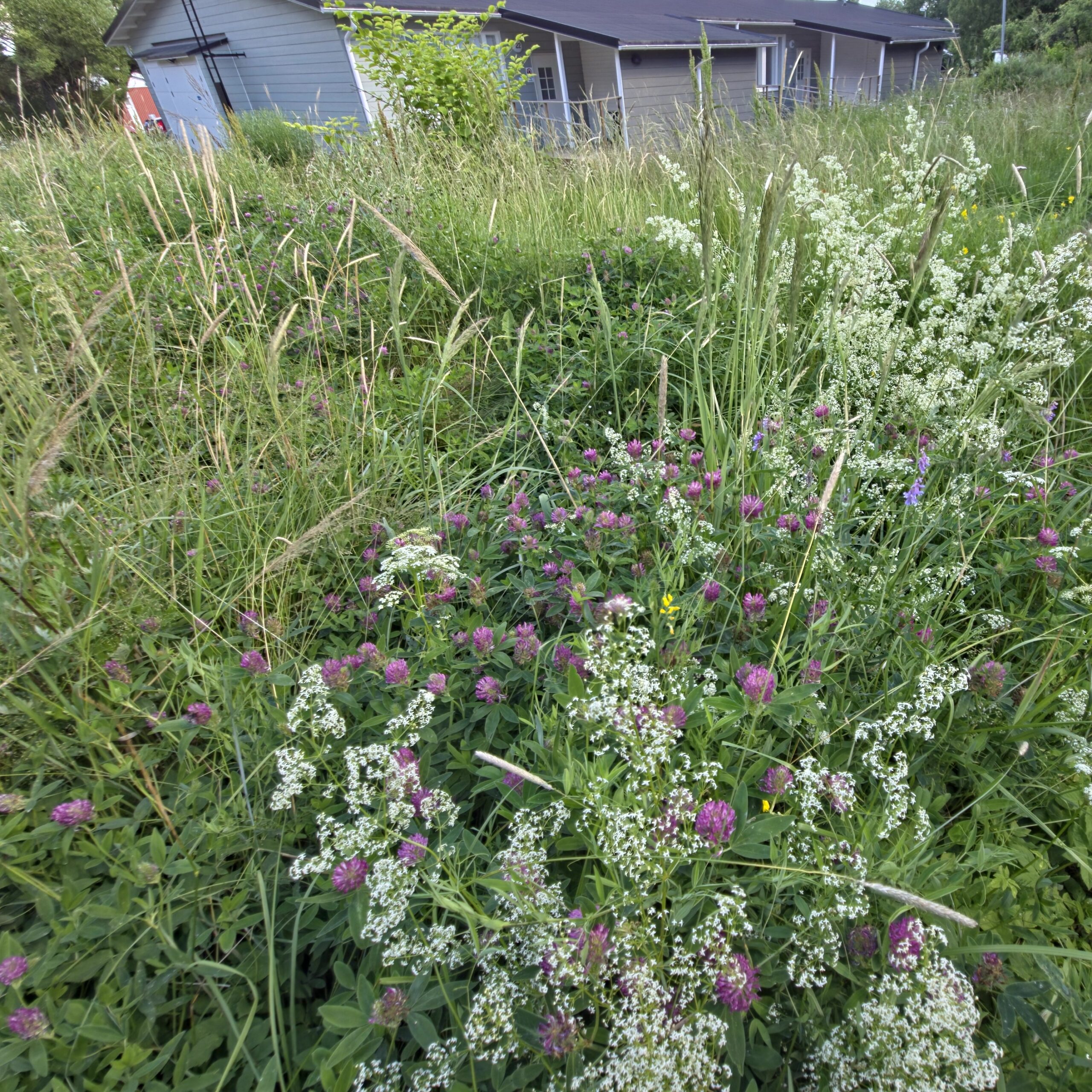
You can also suggest creating a small meadow patch in the housing company’s yard. Even leaving a small area meadow-like can be a great help.
A water point for warm days
Even a small water point placed in a shallow dish or on a flowerpot saucer helps insects on hot summer days. Remember to place a few stones or pieces of wood in the container so that bees and butterflies can drink without drowning. Butterflies can also be served with a butterfly bar, where different kinds of cocktails can be made.
Nesting places and insect hotels
A small insect hotel can be hung on an open, meaning unglazed, balcony. A suitable hotel could be, for example, a birch log with holes of different sizes drilled into it. If you enjoy crafts, you can build a hotel from materials such as reeds and cow parsley.
Many pollinators nest in open and sunny sandy banks or in dead trees, especially standing deadwood. If there is a suitable nesting place in your own yard or in the housing company’s yard, it is worth preserving.
Eeva-Liisa Korpela
WWF Finland, conservation specialist
Porvoon Kodit is taking part in WWF Finland’s and OP’s Ala villiksi campaign. More information, a wide range of links about giving space back to nature, and the registration form can be found on the campaign website wwf.fi/ala-villiksi.
Photo: Olli Jokela